
Words and Photographs DAN PARRY
MILLE MIGLIA:
“The most beautiful race
in the world.”
Client
VISIT GREATER PALM SPRINGS
Special Thanks
STEWART BAIN
JOHN LOBB
BENTLEY MOTORS
BEAM SUNTORY
ACQUA DI PARMA
THE LENEL HOTEL
Brescia, Italy
June, 2026
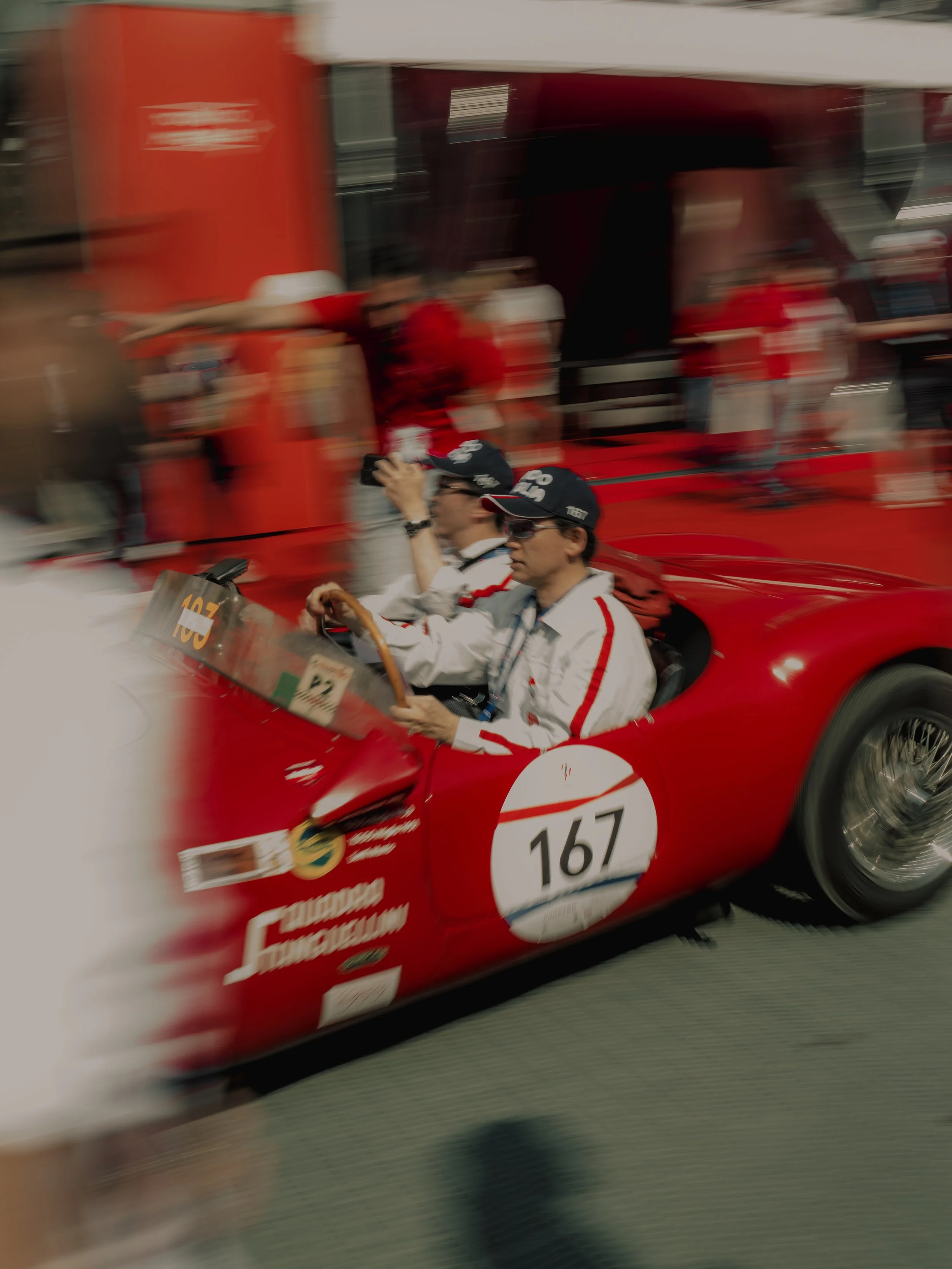
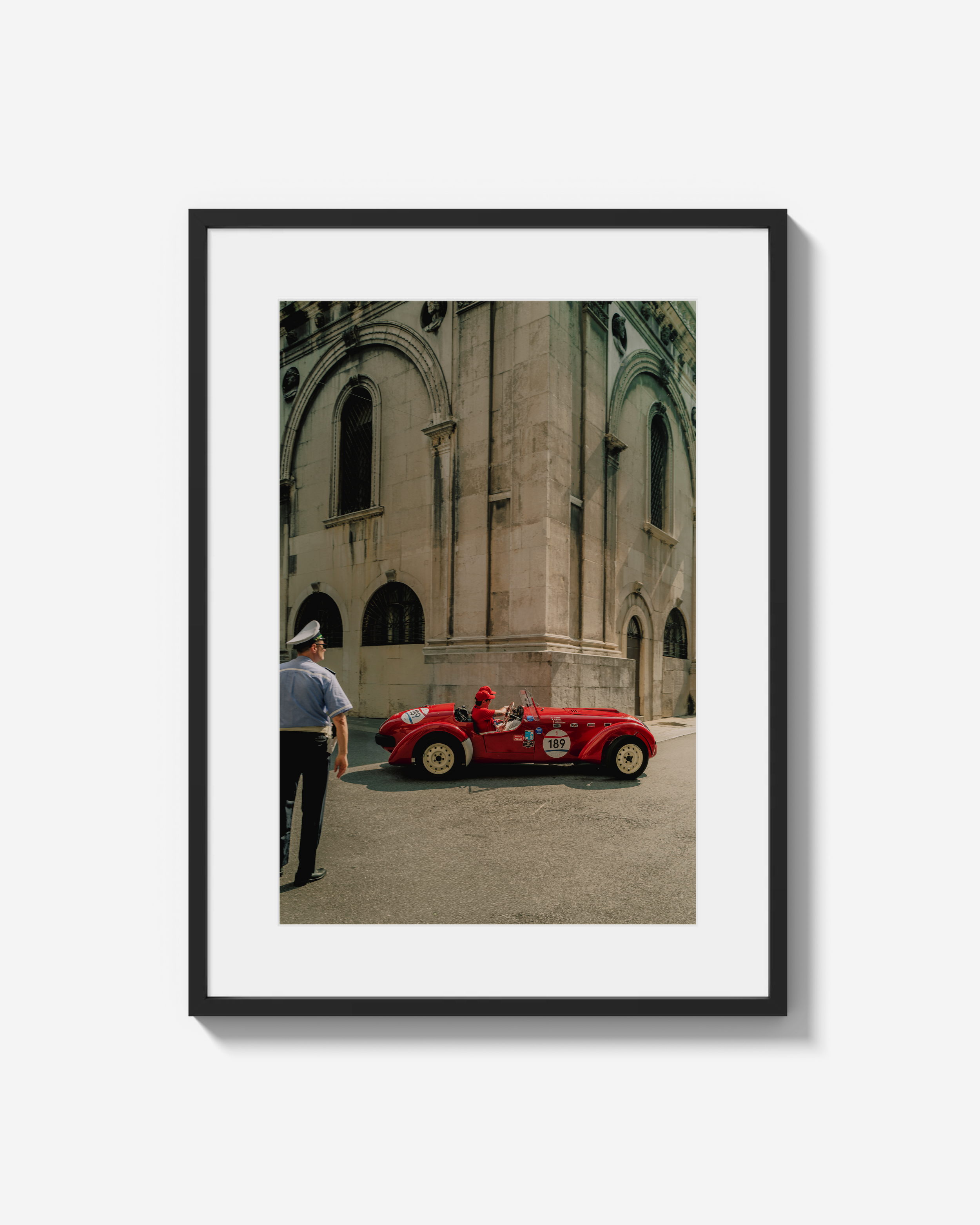
Brescia doesn’t announce itself. It just opens up around you—sun on stone, narrow streets, and that quiet shift in energy when a city is gearing up for something big.
For a few days, the Mille Miglia turns this place into the starting point of a moving story that stretches across Italy. This year, Adesso was on the ground for the opening ceremony, travelling out on behalf of several clients including the Greater Palm Springs Tourism Board, Bentley Motors and John Lobb, to experience it all first-hand.
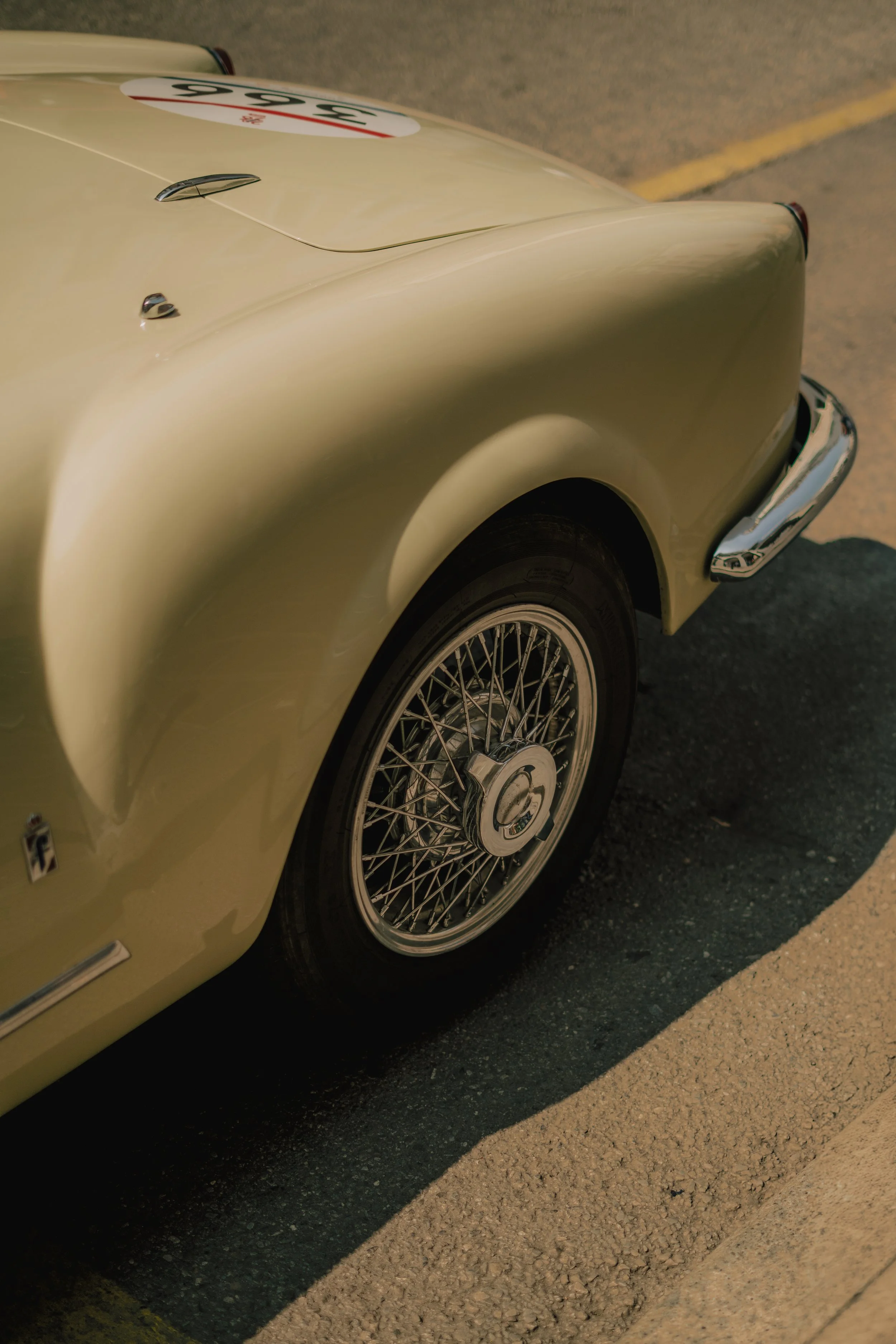
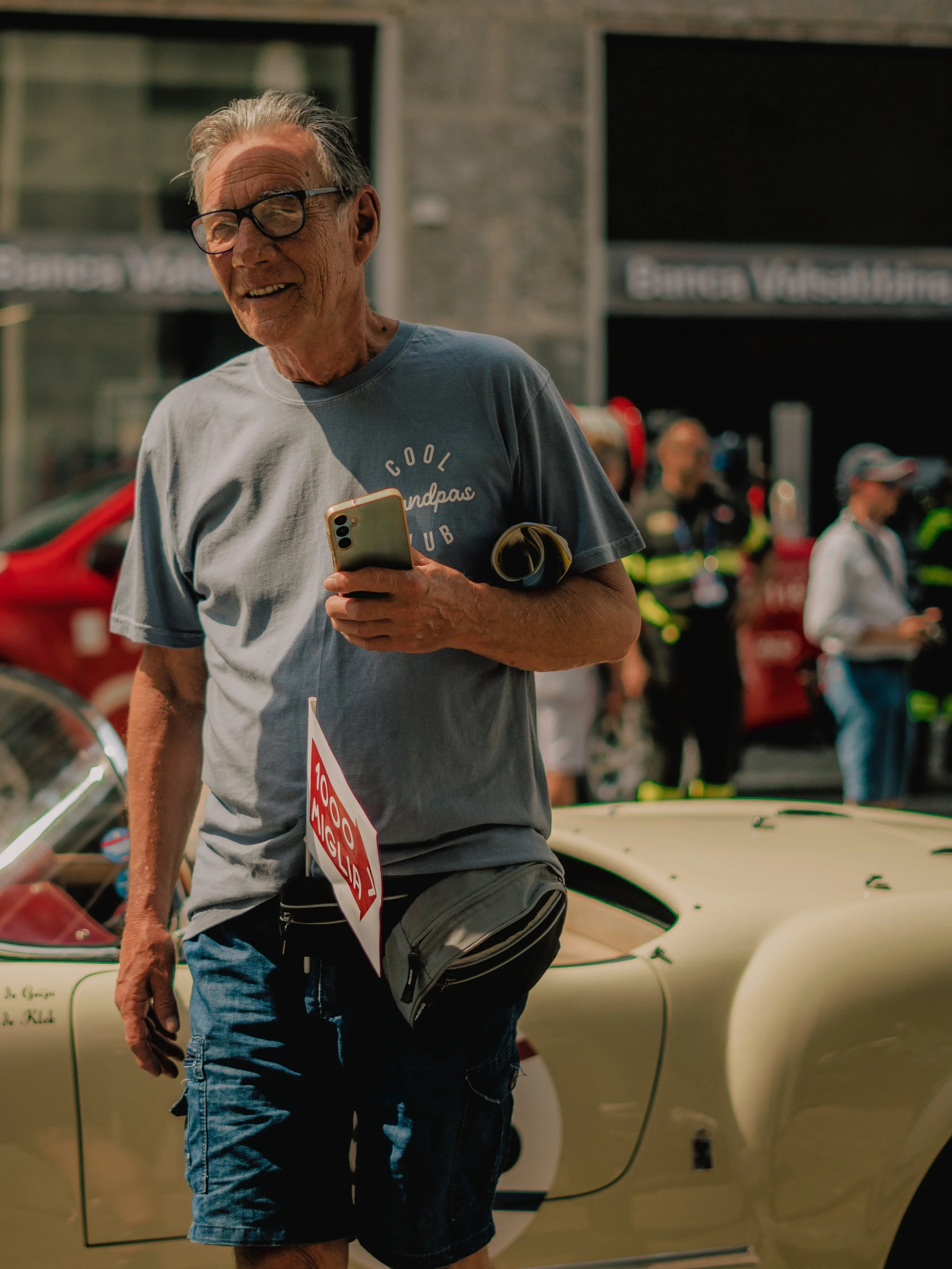
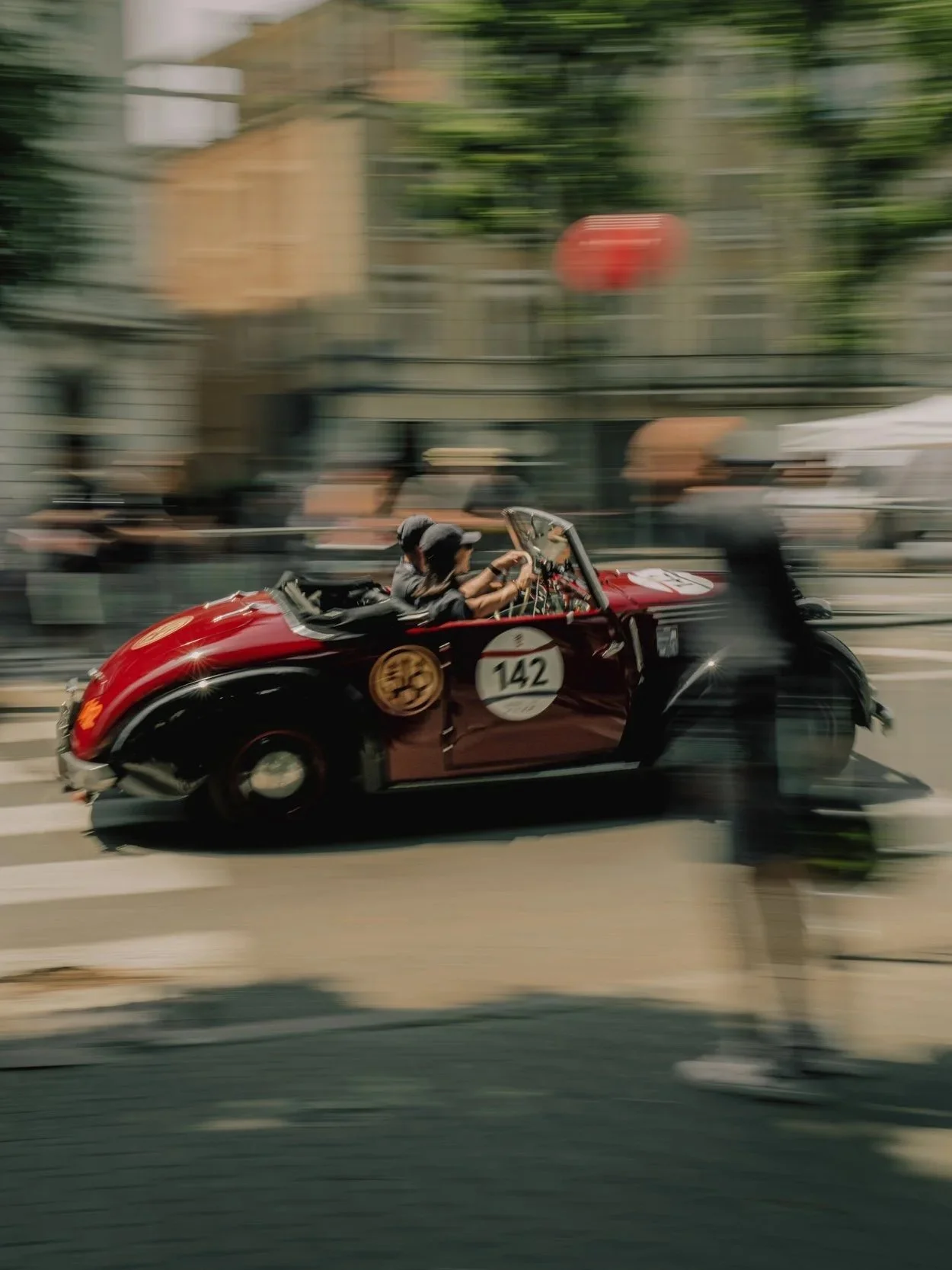
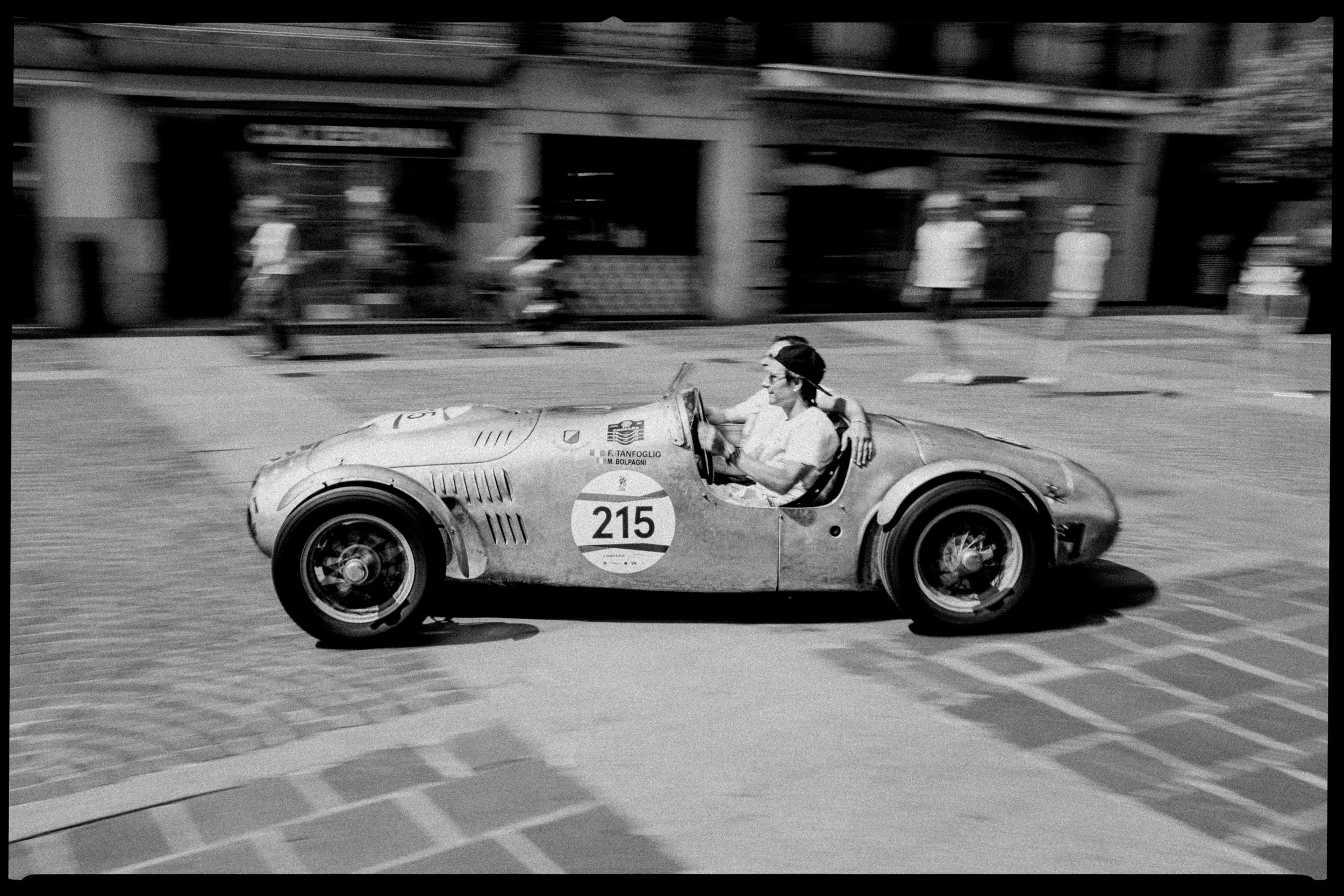
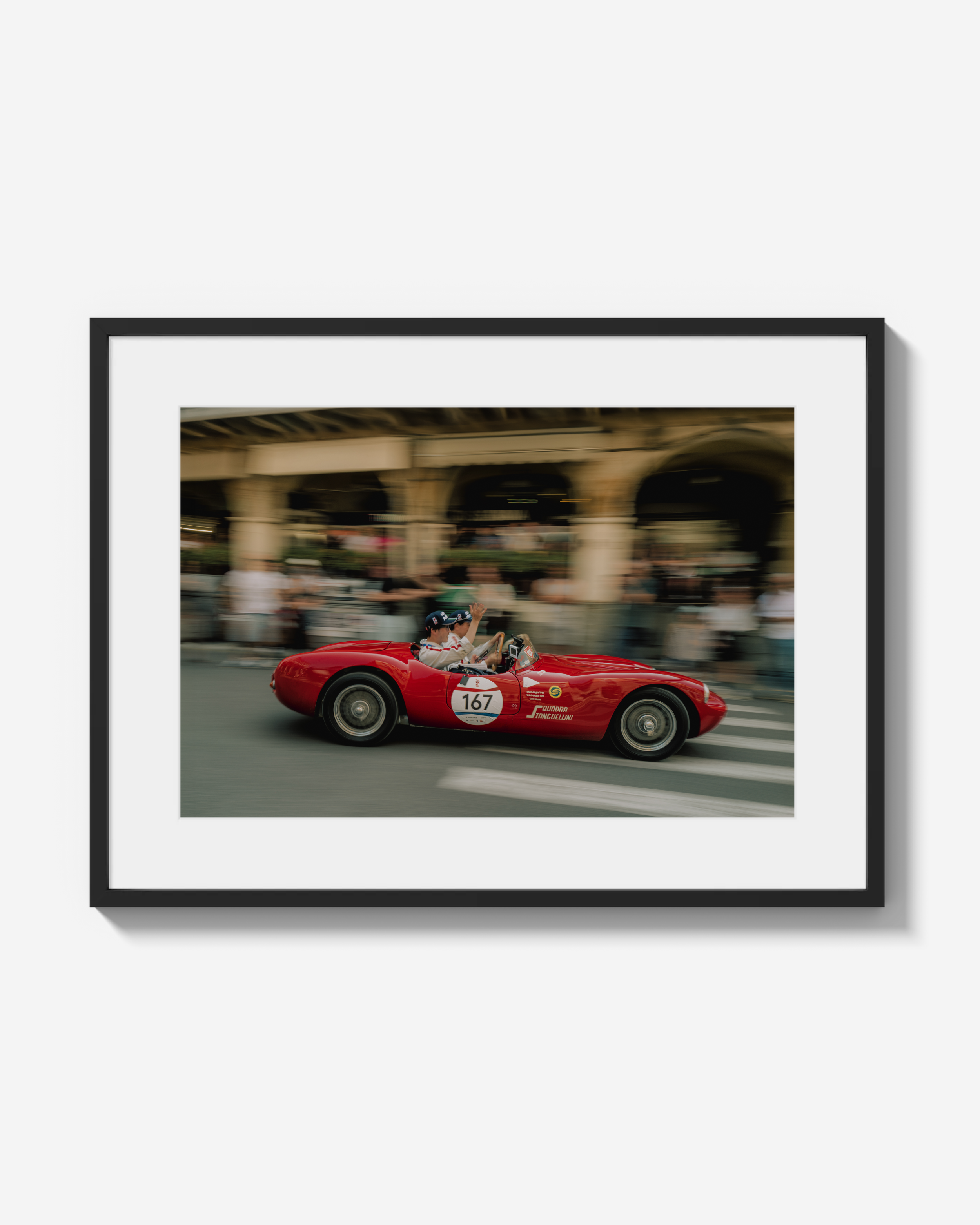
By the afternoon, the centre of Brescia had found its rhythm. Piazza della Vittoria filled with teams, collectors and locals who know the route by heart. Cars arrived in steady waves—pre-war racers, post-war grand tourers, contemporary icons sitting comfortably among them. There was no need to overstate anything. The hardware spoke for itself; and it was built between 1927 and 1957.
Our role was simple: be present, listen, and understand how our partners show up in this kind of environment. Away from polished showrooms, you see what really matters to a brand—how they interact, who they gravitate towards, what they choose to stand next to. That evening, the focus shifted to the Lenel Hotel, where an intimate event by Greater Palm Springs brought together a considered mix of names: Bentley Motors, John Lobb, Suntory Whisky and Acqua di Parma, orchestrated by Stewart Bain of the UI Group.
“Brescia doesn’t announce itself. It just opens up around you”
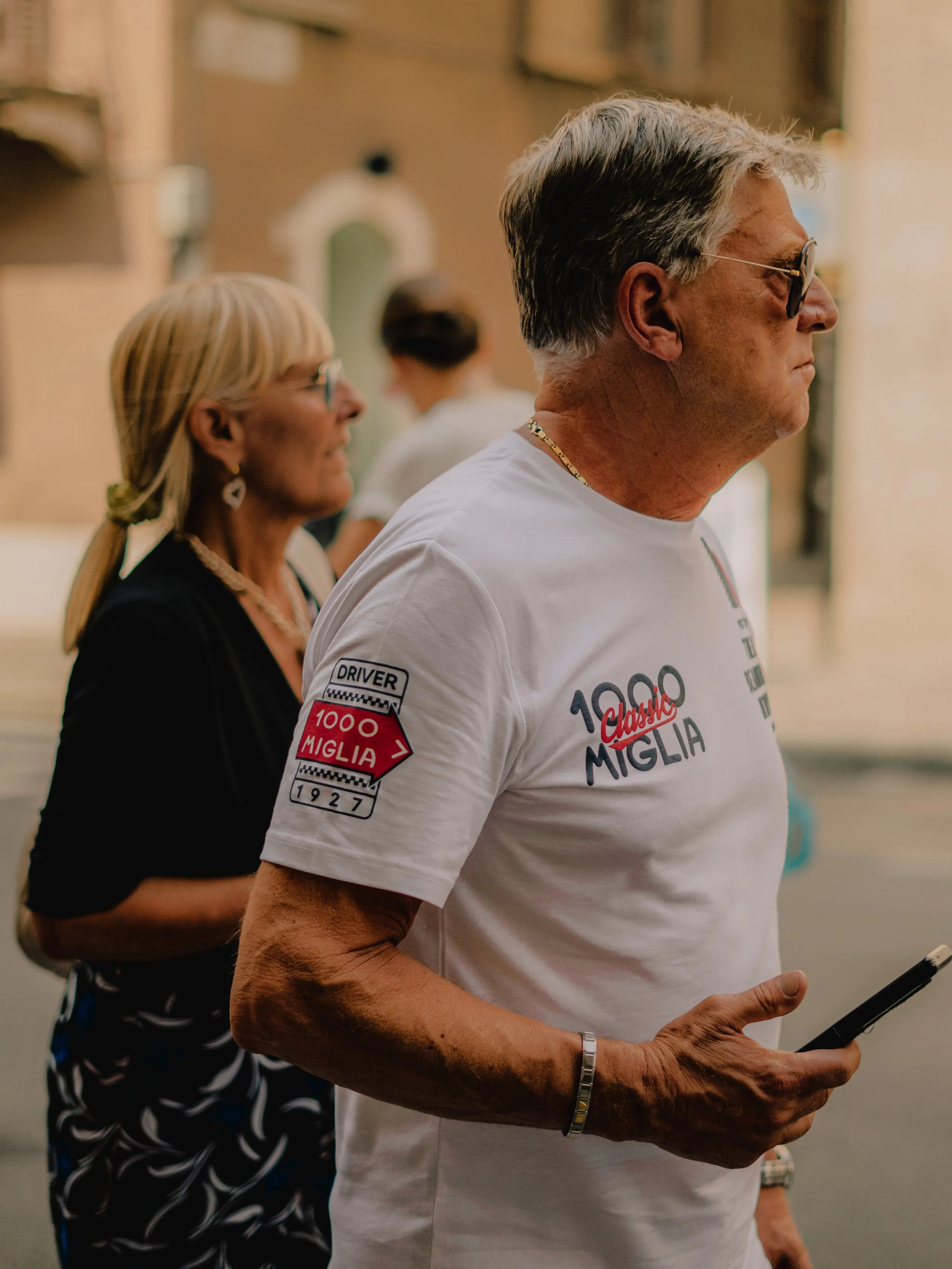
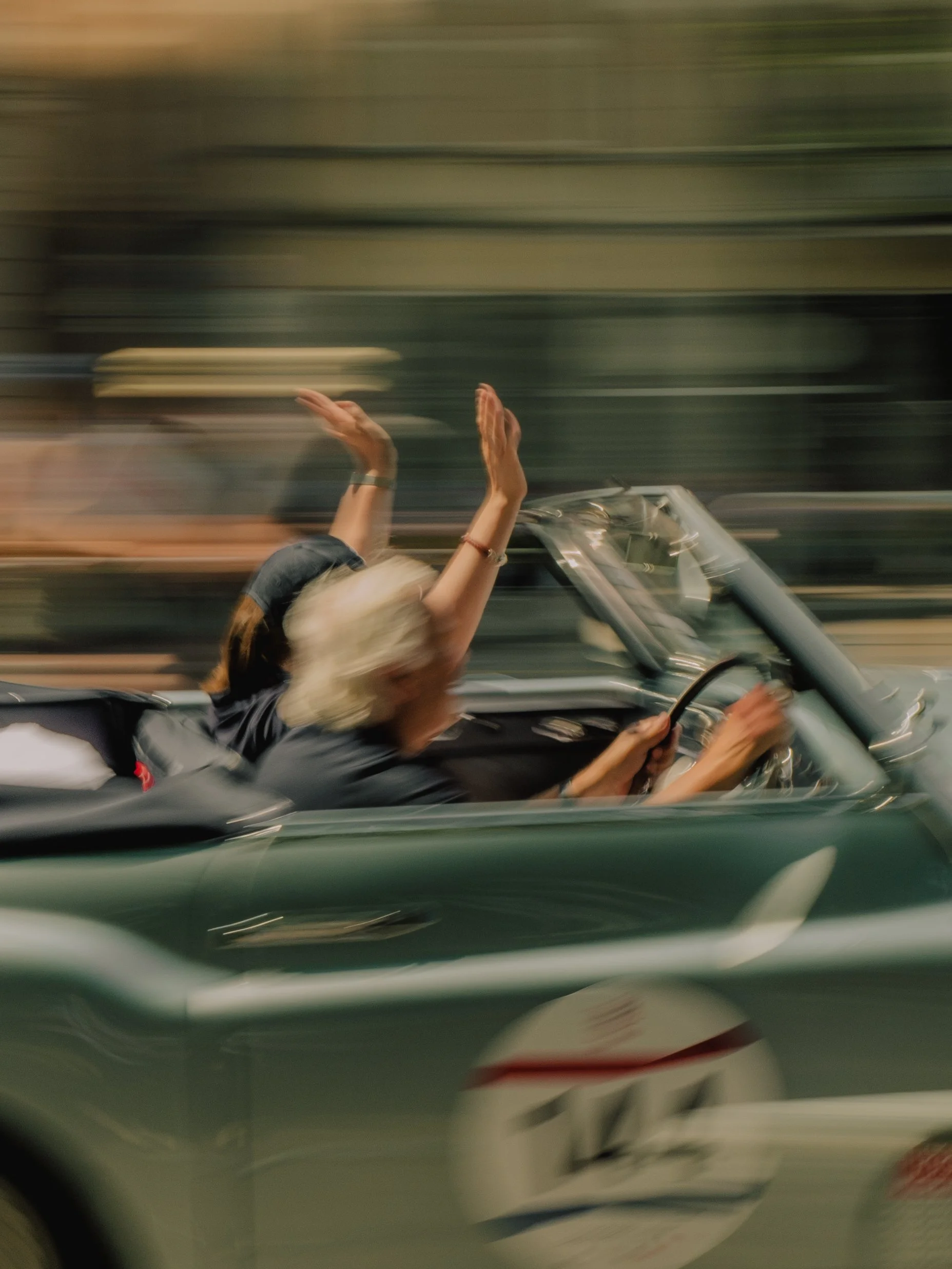
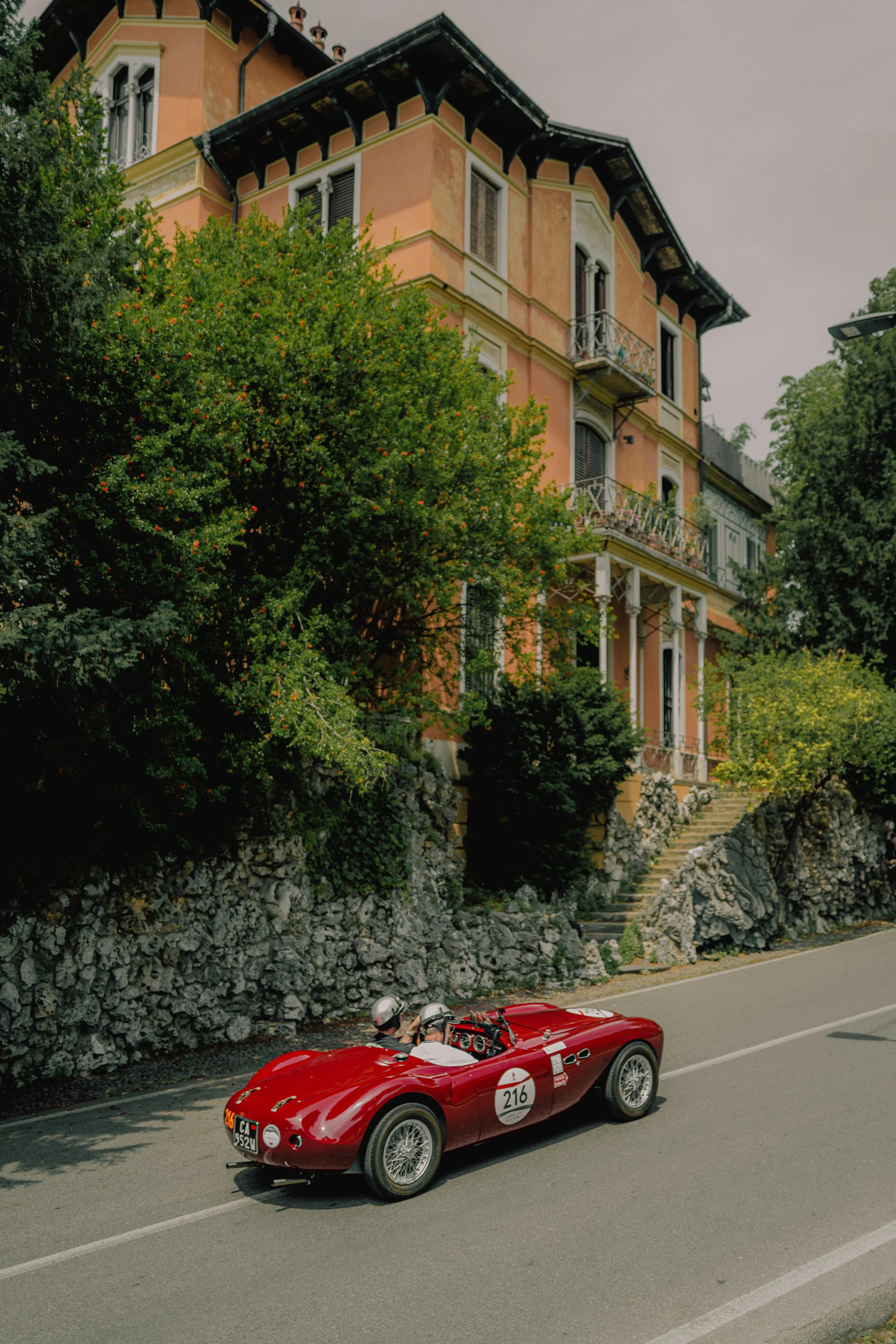
It was a quiet kind of alignment. Bentley had three cars in town, including the a Speed-Six Factory Works, a beautiful blue Continental Supersports; and the incredible Batur—three distinct pieces that represent three eras; past, present and future. John Lobb represented a very different expression of craftsmanship, showcasing tradition and bespoke at its finest, Suntory set the tone at the bar, and Acqua di Parma lifted the room with something fresh, familiar and refined.
For us, it was less about spectacle and more about observing how naturally these worlds sit together when the context is right. Automotive, hospitality, style and craft weren’t competing for attention; they were sharing the same space, speaking to the same audience in their own ways. That’s the territory we love to explore at Adesso—where “luxury” isn’t forced, just truly authentic.
“Old race numbers, fresh stickers, fuel, coffee… Everything mixed into one atmosphere that felt instantly familiar, even if it was your first time standing there.”
Outside of Mille Miglia week, Brescia is a calm, confident base for anyone who values good food, walkable streets and easy access to some of northern Italy’s most interesting roads.
The historic centre is compact enough to navigate on foot, which means you move slowly and actually notice things: the texture of the stone underfoot, the way the light drops into the red hues of aperitivo late afternoon, the mix of locals on their usual routes and visitors tracing the same line for the first time. Between appointments and events, we found ourselves slipping into cafés and small bars that feel built for regulars rather than tourists—always a good sign.
The city sits within easy reach of Lake Garda and the surrounding countryside, which makes it a strong base if you’re building a broader trip around Mille Miglia. You can spend the morning in the middle of a world-famous start line and be by the lake before sunset, without ever feeling rushed. For hosting brands, that blend of intensity and calm is useful. You can host, reset, and regroup within the same day.
From an Adesso perspective, Brescia’s appeal is its balance. It has enough infrastructure to comfortably host high-profile events and international guests, but it hasn’t lost its everyday character. You feel the history, but you’re not walking through a museum. It’s alive. That makes it an ideal backdrop for experiences that want to feel grounded rather than staged.
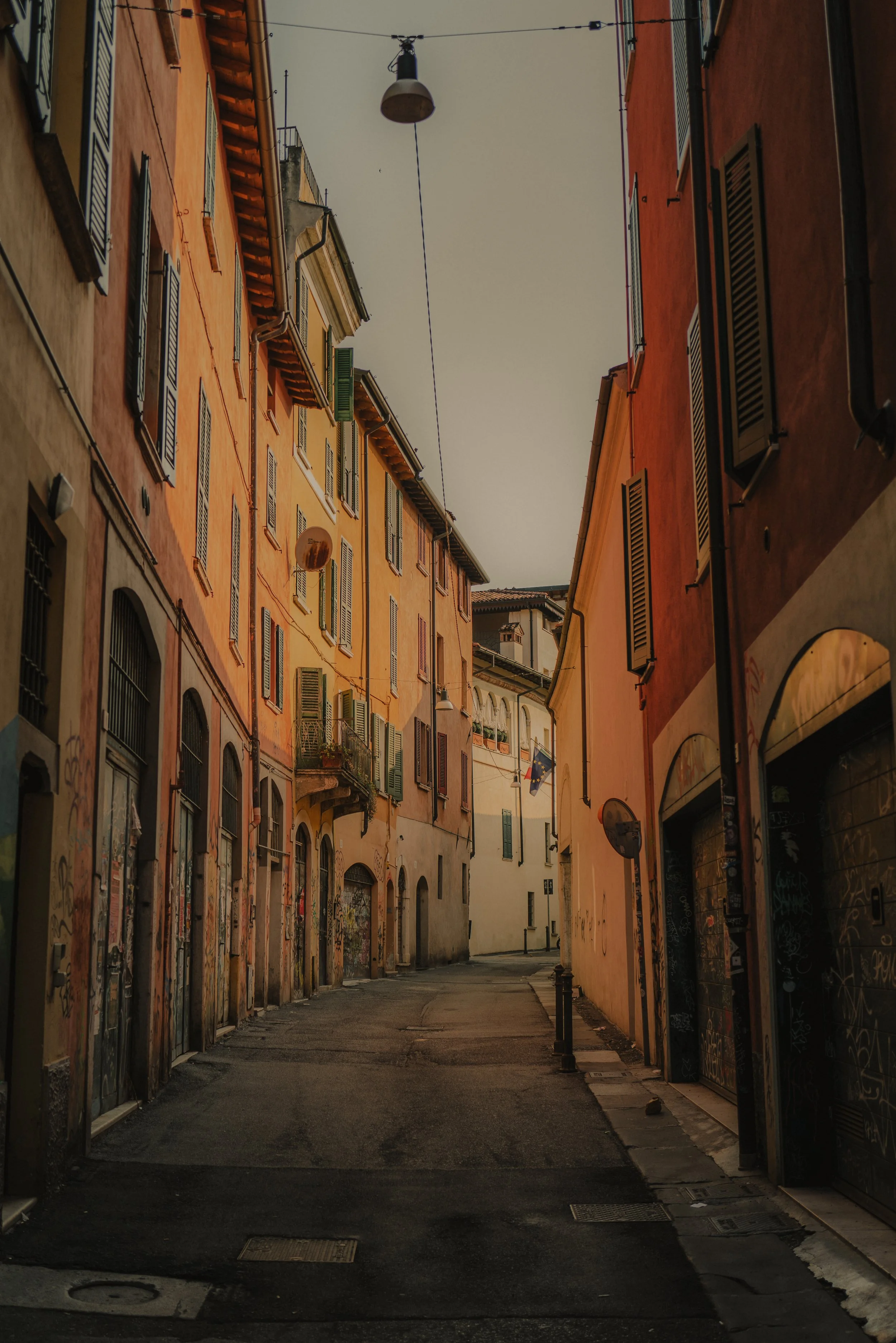
Brescia: A Quiet Base with a Loud Story
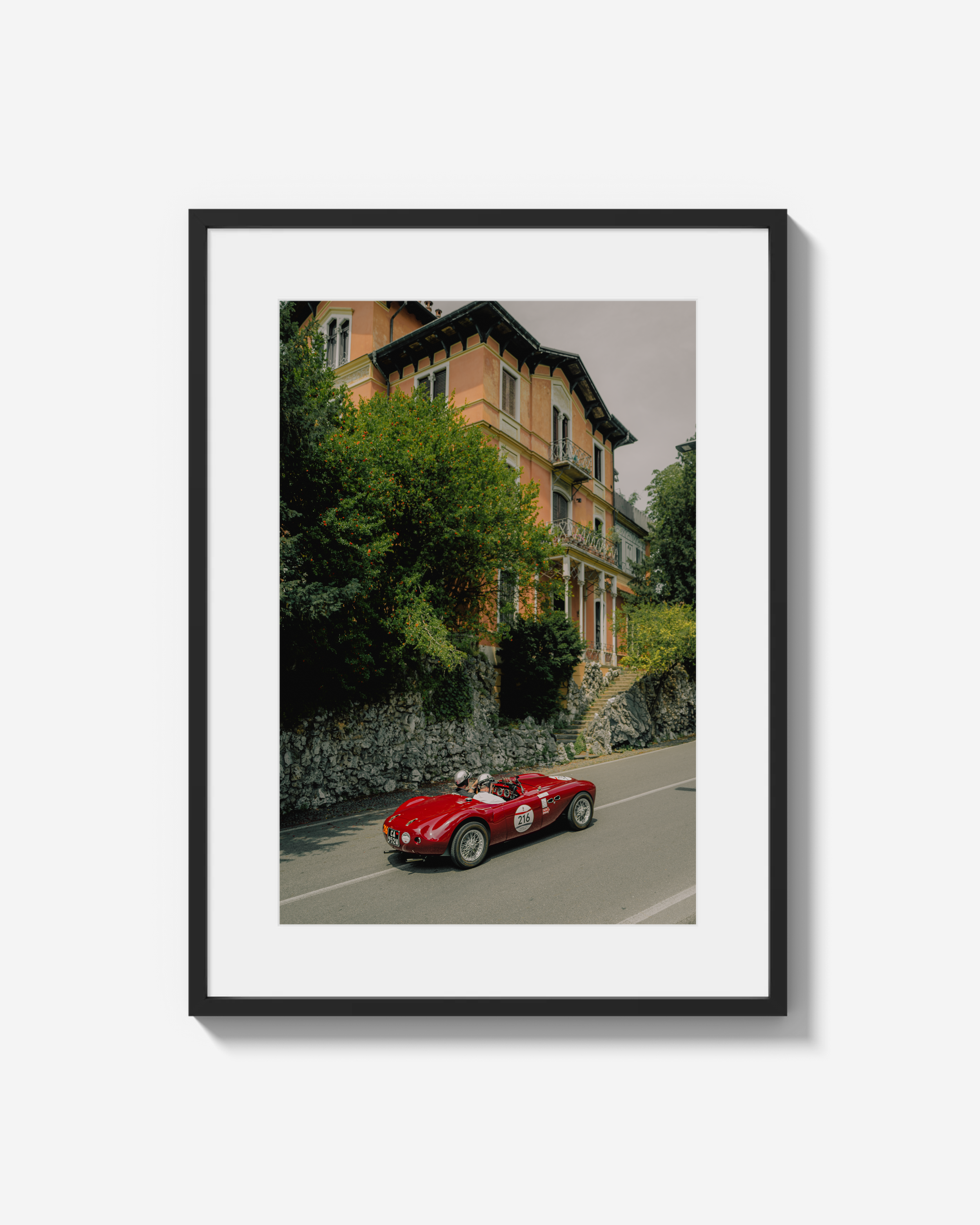
The Mille Miglia itself is the reason most people come to Brescia in June, and it works differently to most automotive “events”. It isn’t contained. It leaves.
The opening ceremony and start line are where everything compresses into a single place. Cars that belong in archives are suddenly idling nose-to-tail. There’s a natural mix: long-time entrants who know every stage and first-timers who have built entire projects just to make the start. You feel part of something that stretches far beyond a single city square.
As a travel experience, Mille Miglia is less about ticking off a landmark and more about following a moving thread. If you stay in Brescia for the start, you see the build-up: scrutineering, paddocks, last-minute adjustments, teams testing their own rituals. If you follow the route; even for a day or two, you see how different towns and regions respond when the cars roll in. Each stop shapes its own atmosphere around the same core idea.
For spectators, that opens up options. Some will want the intensity of the start line; others will prefer a quieter perspective from a hill town further along the route. The beauty is that both approaches are valid. Mille Miglia is generous in that way. It gives you multiple ways in to experience it.
What’s most captivating is the passion around these cars. They’re blessed before the race; It’s a religion. And to contrast, the cars haven’t been retired to static roles; they’re bone shakers. They travel real distance, on real roads, in testing conditions. They’re used and enjoyed as they were designed to be. They overheat, catch on fire, and break down. That authenticity carries through. The most memorable moments aren’t always the most polished—it’s the unscripted emotion of the noise, the style, and the sheer veracity.
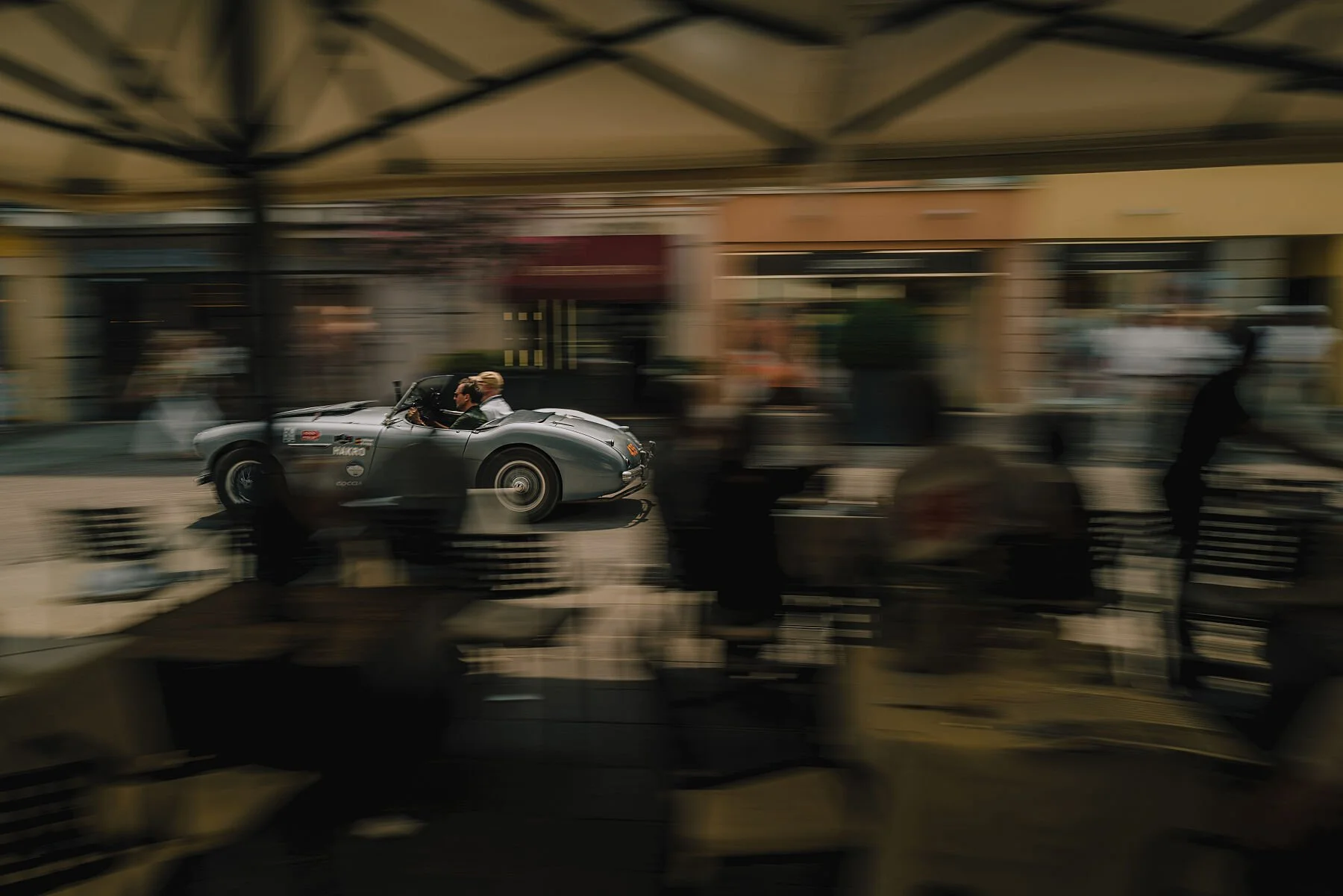
In the thick of it.
Being “there” changes how you read a place.
In Brescia, sharing spaces with Greater Palm Springs and the brands they’d brought together meant we saw the city from a different perspective—taking note of how people share this appreciation for craft, where they naturally gravitated, and which moments felt like an extension of their world. It wasn’t pretentious; it was communal space for the love of quality, artistry and heritage.
The Lenel Hotel gathering was a good example. On paper, it was a simple combination: a Californian destination brand, who are positioning themselves more in the automotive world, exploring the natural synergy with brands established in the space; Bentley, John Lobb, Suntory and Acqua di Parma. In practice, it felt like a live case study in how to build a calm, confident presence during a high-energy week; and how alignment matters.
For Adesso, being on the ground alongside brands like these is invaluable. You understand what “luxury” actually looks like when it has to work in real time—after a long travel day, you see which details land, which touch-points genuinely resonate, and where simplicity wins.
It’s also where relationships are strengthened. Shared early mornings at the start line, late finishes at the bar, chance conversations in hotel lobbies—they’re all part of the same ecosystem. Over time, that’s what allows us to built real connection with the individuals that spearhead these brands; we’ve seen how they operate when it counts, on a personal level.
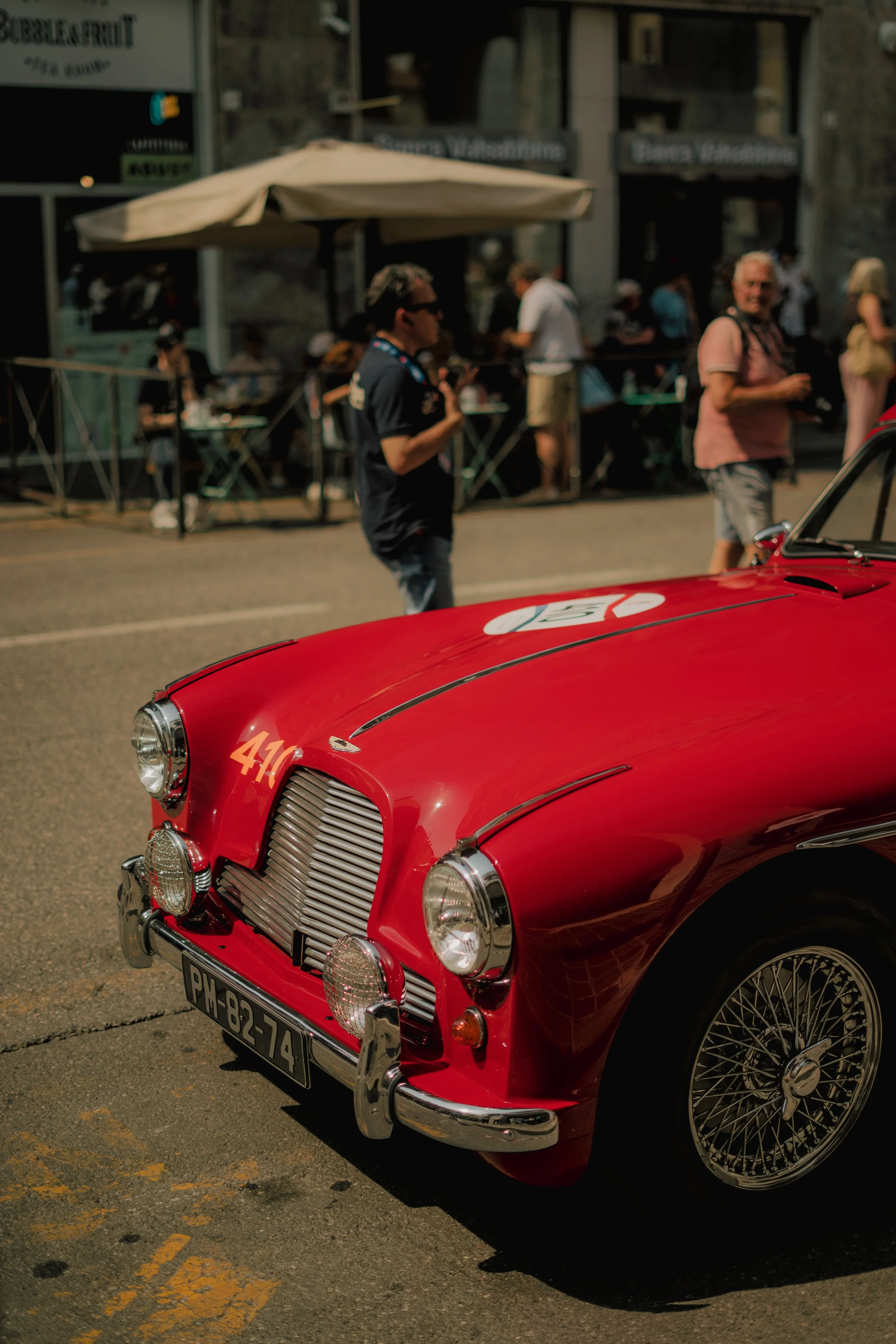
“Brescia is not just a backdrop; it’s an active part of the story of automotive history.”
In the end, Brescia didn’t feel like a trip in the diary or another event ticked off the calendar. It felt like a reminder. A reminder that the work we do at Adesso only really makes sense when it’s lived—on streets that smell of espresso and hot brakes, in hotel bars where ideas drift between time zones, at start lines where history and intention share the same space. We left with no trophies and no times to beat, just a quiet conviction that these are the moments that shape the projects yet to come.
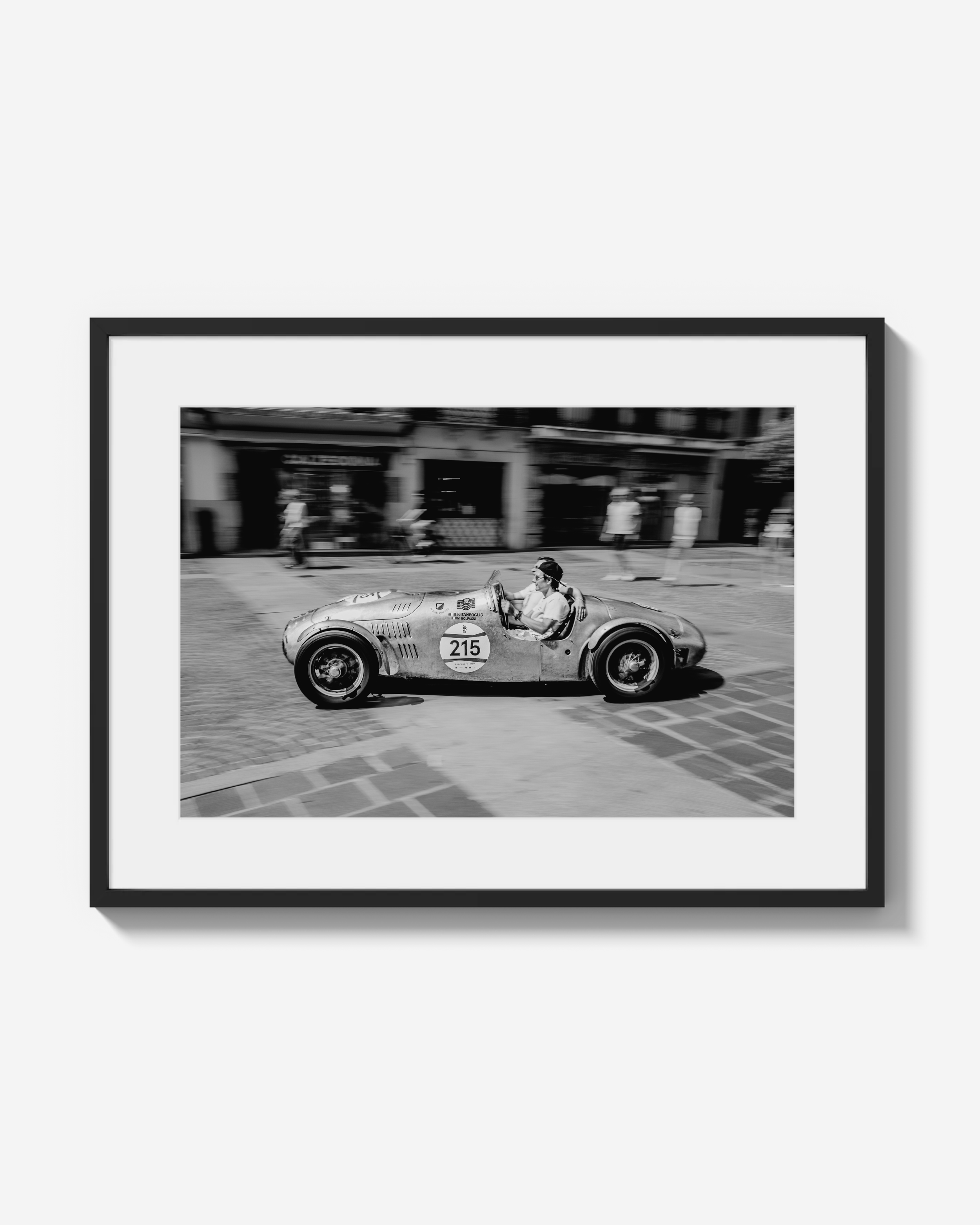
Mille Miglia III
from £35.00
Archival Fuji Crystal paper with a semi-matt finish.
Available in Print-Only or Framed Formats.
Frames are Handmade to order, in black FSC®-certified wood.
Mille Miglia IV
from £35.00
Archival Fuji Crystal paper with a semi-matt finish.
Available in Print-Only or Framed Formats.
Frames are Handmade to order, in black FSC®-certified wood.
Mille Miglia I
from £35.00
Archival Fuji Crystal paper with a semi-matt finish.
Available in Print-Only or Framed Formats.
Frames are Handmade to order, in black FSC®-certified wood.
Mille Miglia II
from £35.00
Archival Fuji Crystal paper with a semi-matt finish.
Available in Print-Only or Framed Formats.
Frames are Handmade to order, in black FSC®-certified wood.